

The Week in Bitcoin - October 19–25, 2026
We ended the week at $80,232, 33% below our $120,000 base case and 15% above our $70,000 bear case. Reaching our base case by year end requires a 50% rally with 9 weeks remaining.
Last week’s $80,600–$86,130 trading range failed as Bitcoin broke below support, bringing our anticipated test of the $78,061 one-year moving average into focus.
Weekly News Recap

Top story of the week
AI doubts pushed investors toward safe havens as Bitcoin’s rebound failed.
Treasuries attracted buyers as investors reduced risk, while Bitcoin slipped below $80,000 over the weekend. US spot Bitcoin ETFs recorded $301.2 million in net inflows for the week, reversing the previous week’s $228.4 million outflow. However, Thursday’s $635.6 million and Friday’s $137.9 million withdrawals showed how quickly demand weakened toward week end.
Other headlines this week
Swiss retail access. Switzerland approved a regulated route to direct Bitcoin exposure. FINMA’s first retail spot fund approval includes a diversification exemption and custody safeguards.
Dividend-funded allocation. Franklin Templeton introduced a dividend-funded route to Bitcoin exposure. Its two registered ETFs will start with 95% stocks and 5% Bitcoin exposure, redirecting dividends into Bitcoin-linked investments, not on-chain holdings.
Regulated leverage. Regulated Bitcoin derivatives and collateral financing are expanding. Webull plans November Bitcoin perpetuals for futures-approved customers, while Kalshi Prime plans margin loans against BitGo-held Bitcoin.
Security updates. Bitcoin developers accelerated vulnerability disclosure and patching. Bitcoin Core adopted faster disclosure and patching for easily rediscovered bugs; Eclair patched two Lightning theft paths, with no known exploitation reported.
Treasury financing. Strive expanded its Bitcoin treasury financing. Its $630 million SATS preferred offering began trading, supporting plans for Bitcoin and income-generating assets.
Energy pressure. Oil stayed elevated despite recovering Hormuz flows. Bloomberg economist Ziad Daoud cited the risk of renewed Iran fighting.
What it means
Bitcoin’s financial infrastructure continues to expand, but broader access has yet to translate into sustained demand.
The failed rebound and late-week ETF outflows underscore that a positive weekly flow balance alone does not establish a recovery. Elevated oil prices add uncertainty to the outlook for inflation and monetary easing. A durable recovery will require consistent buying through Bitcoin’s expanding investment channels.
Market Brief
Bitcoin closed the week at $80,232, with a market capitalization of $1.61 trillion and 1,246 sats per dollar.

It opened at $81,899 and finished at $80,232 for a -2.04% weekly return. The early rebound peaked at Wednesday’s $84,297 daily close before fading to the week’s lowest daily close on Sunday.
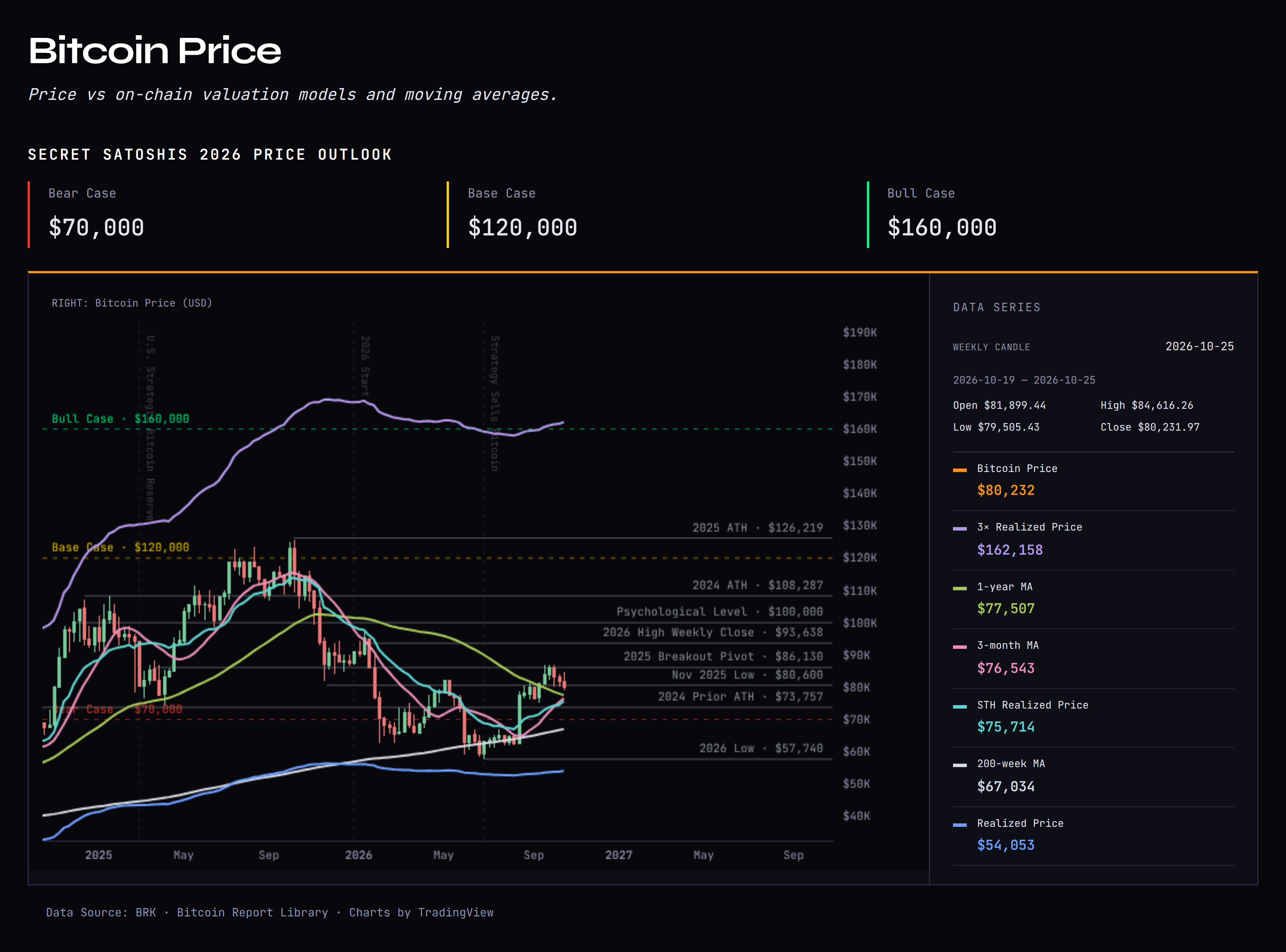
The reversal leaves sellers with near-term momentum; a rebound needs more than an isolated strong session to change that assessment.
Our market view
Bitcoin closed below the $80,600 November 2025 low on October 24, its first close beneath that level since September 17. With former support now overhead, the near-term outlook remains bearish. We expect Bitcoin to test its one-year moving average at $77,507 over the next one to two weeks.
Holding $77,500: Trading between the $77,507 1-year moving average and the $80,600 November 2025 low should favor the lower end.
Below $77,500: A break brings the zone between the $76,543 3-month moving average and the $75,714 short-term-holder cost basis into focus.
Above $81,700: Reclaiming the $81,747 50-day moving average brings the $86,130 2025 Breakout Pivot into focus.
Seasonal Context
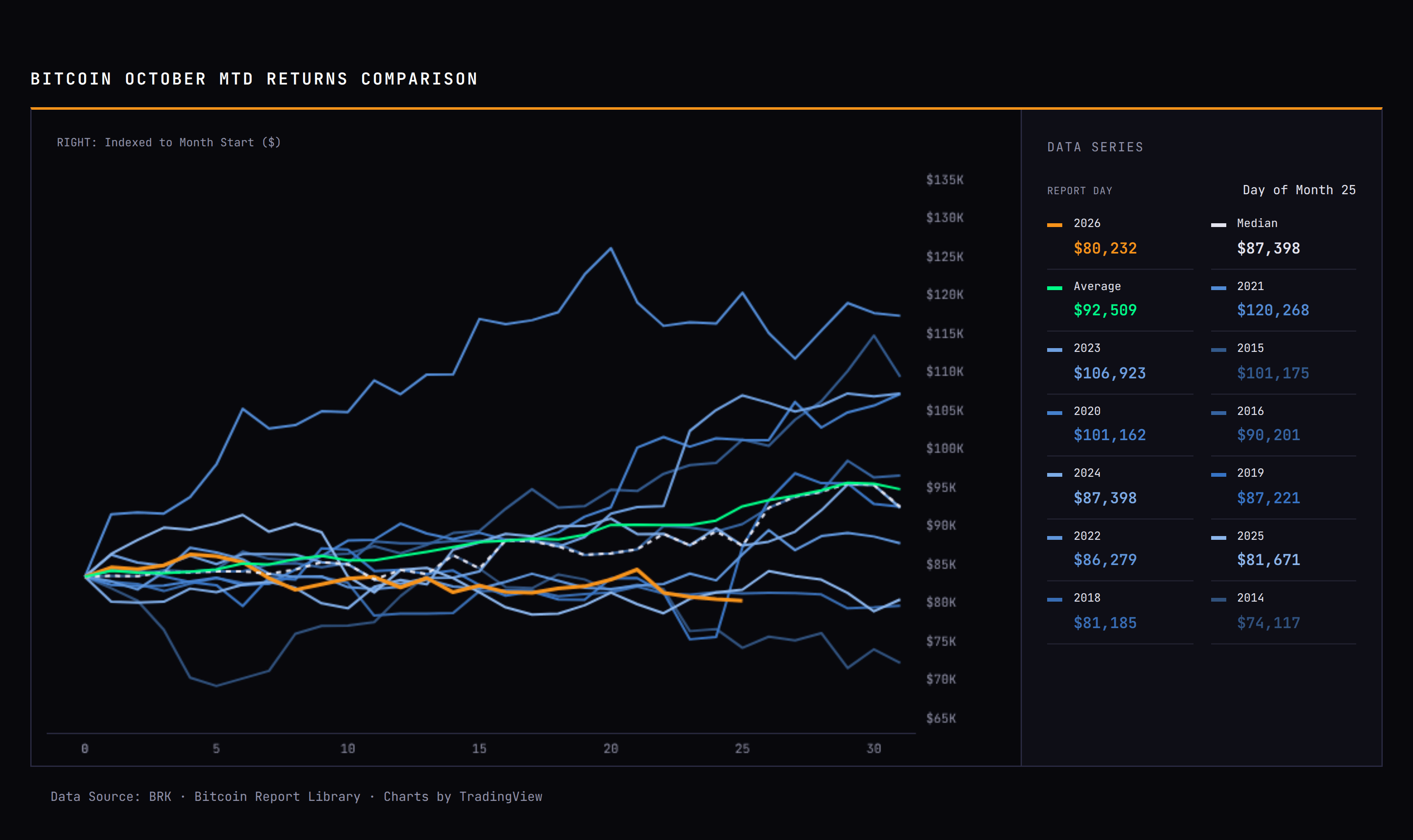
October’s weakness deepened: through October 25, Bitcoin returned -3.74% month to date, 8.60 percentage points below the same-date historical median of 4.86%. That places it 11th of 12 at this point in October.
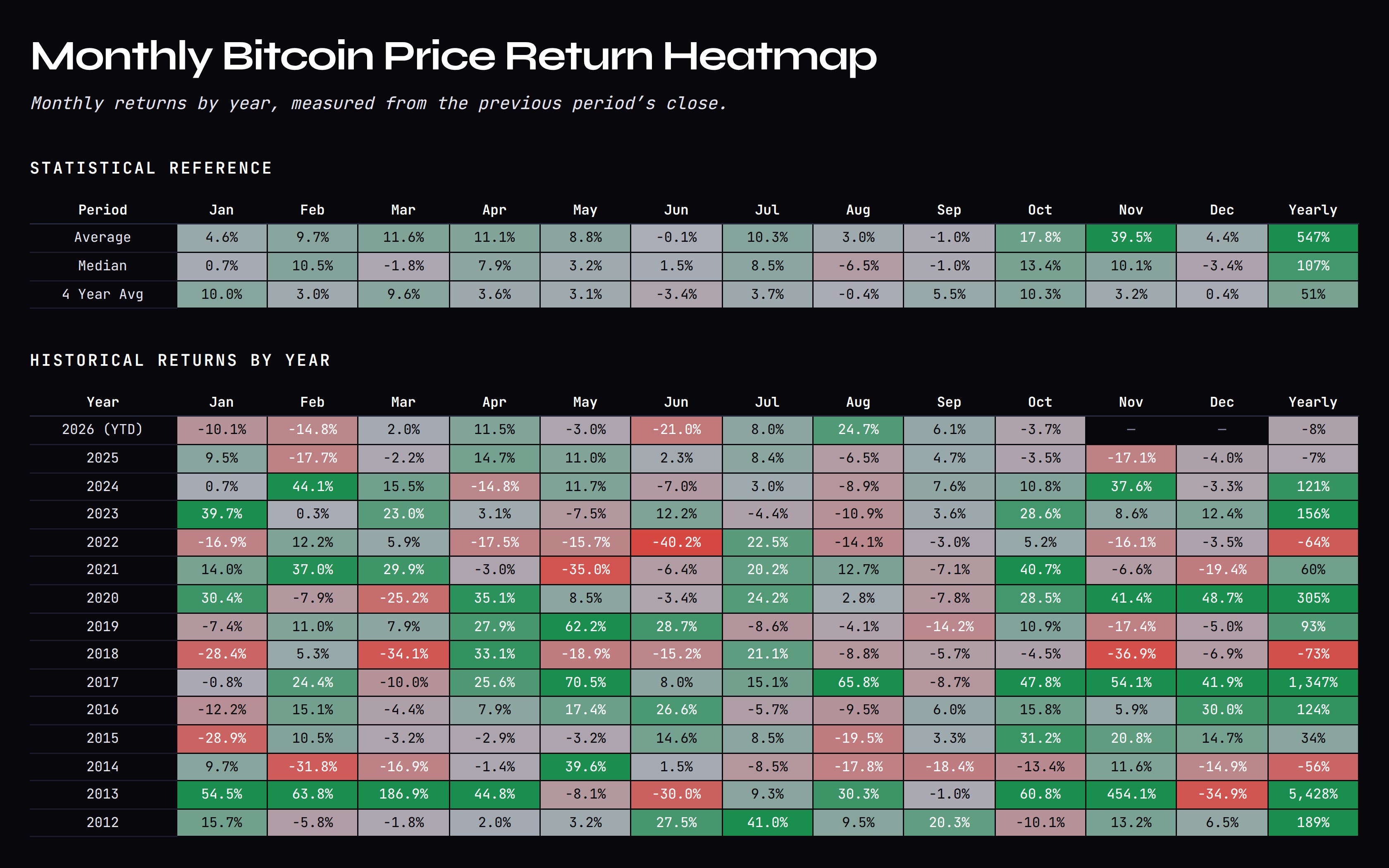
November has historically risen in 9 of 14 years with a 10.11% median return, a favorable record rather than evidence that this year’s weakness will reverse.
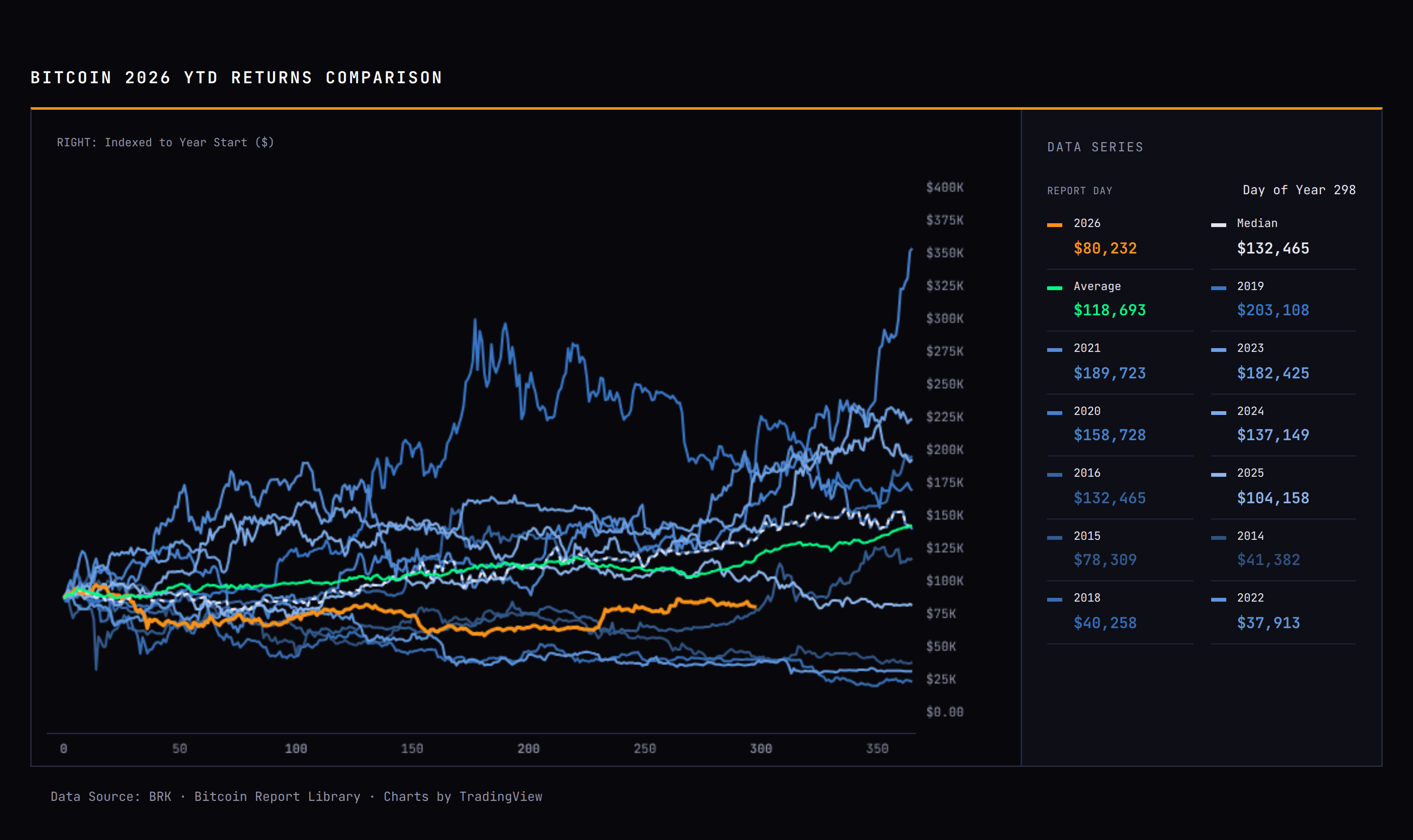
Bitcoin’s -8.09% year-to-date return through October 25 leaves the annual recovery further behind. An 8.80% rally would restore breakeven, the more immediate milestone as year end approaches.
Looking Ahead
October 27: Franklin Templeton’s Bitcoin DRIP ETF prospectuses are scheduled to become effective; we watch whether the dividend-funded route attracts allocations.
October 28: The Federal Reserve’s rate decision and guidance test the prospect of easier financial conditions.
October 29: September PCE inflation and advance third-quarter GDP test the inflation-growth mix behind rate expectations.
November 3: US midterm elections put the legislative backdrop for Bitcoin policy in focus.
November 6: The October US jobs report tests the labor-market backdrop for the next policy decisions.
Follow the Bitcoin market between issues

Explore Bitcoin’s price, valuation models and network activity in our Market Dashboard, updated daily. Use the data to revisit our outlook and form your own view.
