

The Week in Bitcoin - October 26–November 1, 2026
Bitcoin ended the week at $77,666, down 3.01%, as a $6.3 billion Binance hack rattled confidence in exchange custody and the Federal Reserve reinforced expectations of tighter monetary policy.
With eight weeks remaining in 2026, Bitcoin sits 35% below our $120,000 base case and 11% above our $70,000 bear case. Reaching the base case now requires a 55% rally by year-end, a considerably higher hurdle given the current market weakness.
Our short-term downside bias from last week proved correct, although the market broke below the $77,500 support level we were watching.
Weekly News Recap

Top story of the week
Binance’s $6.3 billion hack tests exchange confidence
Binance pledged company funds to cover losses from a $6.3 billion security breach, one of the largest exchange thefts on record.
The stolen assets included 18,270 BTC, highlighting the risks of holding Bitcoin through centralized custodians rather than controlling private keys directly.
Withdrawals resumed in phases on Sunday, beginning with Bitcoin. Binance reported that approximately 95% of affected assets had been covered by November 1, while billions of dollars in net withdrawals reflected the immediate pressure on customer confidence.
Other headlines this week
Fed signals tighter policy: The Federal Reserve held rates at 3.75%–4.00%, with two officials favoring a hike. Market-implied odds of a December rate increase reached 82.6%, reinforcing expectations of restrictive financial conditions.
Corporate Bitcoin demand remains uneven: Strategy purchased 7,218 BTC but also sold 5,552 BTC during Q3 to fund preferred dividends and share repurchases. Meanwhile, Strive disclosed a $511.4 million purchase of 6,182 BTC.
Bitcoin Core addresses node vulnerabilities: Version 32.1 and maintained branches patched three vulnerabilities capable of crashing nodes.
Hardware wallet security faces scrutiny: Keystone disclosed the theft of a device-authentication key and plans to destroy 18,835 affected inventory wallets. The compromised key cannot authorize Bitcoin transactions. Separately, Trezor warned certain CryptoBilis customers to migrate funds to wallets generated with new recovery phrases following a credible report of potential device tampering.
Selling pressure accelerates: Crypto futures liquidations totaled $1.57 billion during Friday’s decline. US spot Bitcoin ETFs recorded $203 million in weekly net outflows, reversing the previous week’s $305 million in inflows.
What it means
This week’s developments exposed two sources of pressure on Bitcoin: custody risk and tighter financial conditions.
The Binance breach reinforces a central distinction between owning Bitcoin and holding a claim on Bitcoin through an intermediary. Exchange recovery commitments can reduce customer losses, but they do not eliminate counterparty risk.
At the same time, expectations of higher interest rates can weigh on Bitcoin by tightening liquidity and reducing investor appetite for risk assets.
For now, credible reserve disclosures, sustained net purchases, and a recovery in ETF flows would be more meaningful signs of improving conditions than a temporary decline in liquidations.
Market Brief
Bitcoin ended the week at $77,666, with a market capitalization of $1.56 trillion and 1,288 sats per dollar.

Bitcoin opened at $80,073 and finished at $77,666, a weekly decline of 3.01%. The week’s turning point came after Wednesday’s $81,243 close.
By Friday, Bitcoin had fallen to $76,799, erasing the midweek advance before recovering modestly over the weekend.
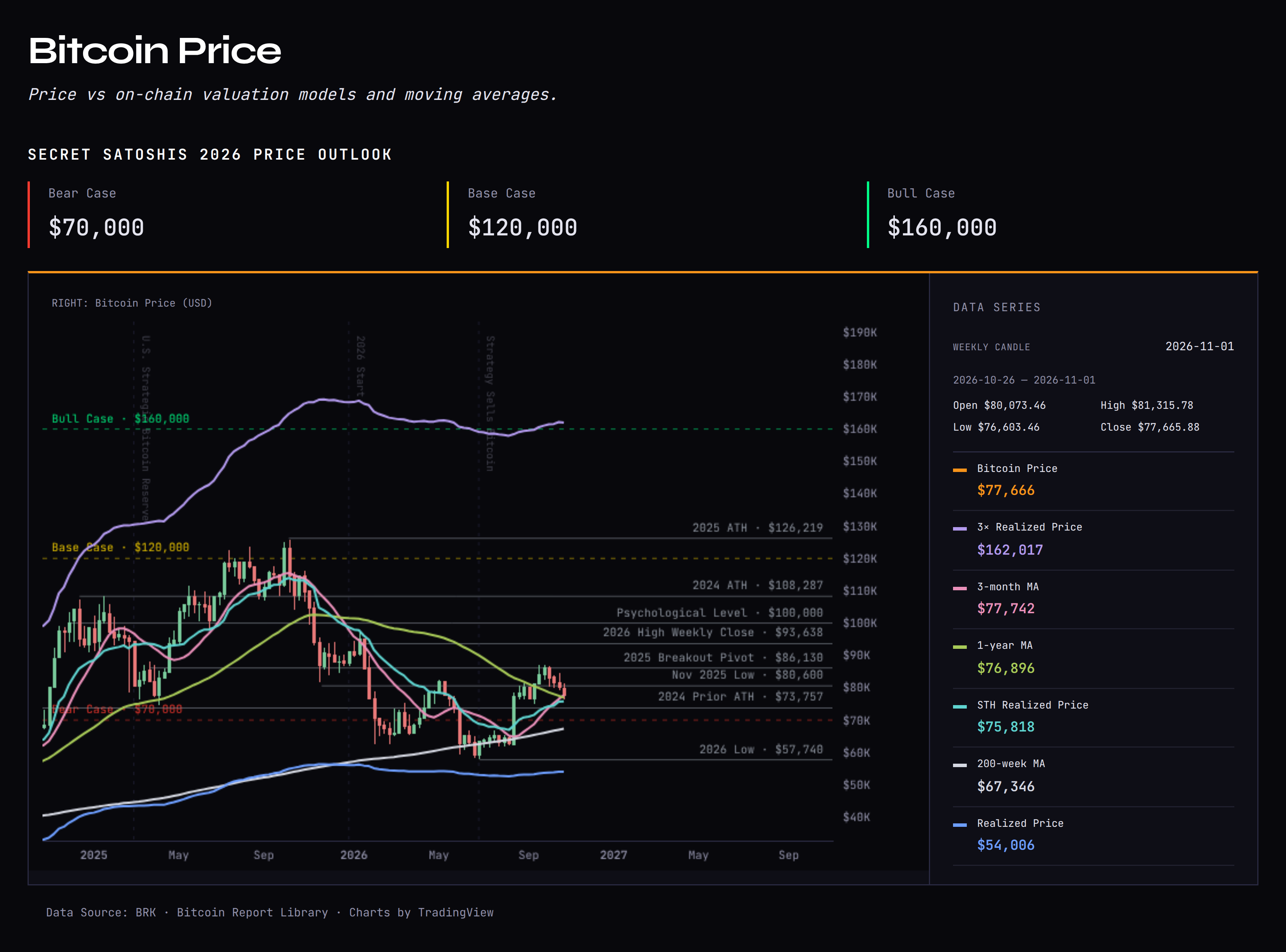
The rebound was not strong enough to reclaim near-term resistance, leaving Bitcoin in a defensive position entering November.
Our market view
Reclaiming the $76,896 1-year moving average on October 31 has not repaired the break below the $77,742 3-month moving average. Over the next one to two weeks, we expect another support test rather than a sustained recovery.
Holding $76,900: Bitcoin remains between its 1-year and 3-month moving averages, with trading likely to favor the lower end of that range.
Below $76,900: A break puts the $75,818 short-term-holder cost basis next; losing it exposes the $73,757 prior 2024 all-time high and $73,103 200-day moving average.
Above $77,700: Reclaiming the $77,742 3-month moving average opens the resistance zone between the $80,600 November 2025 low and $81,858 50-day moving average.
Seasonal Context
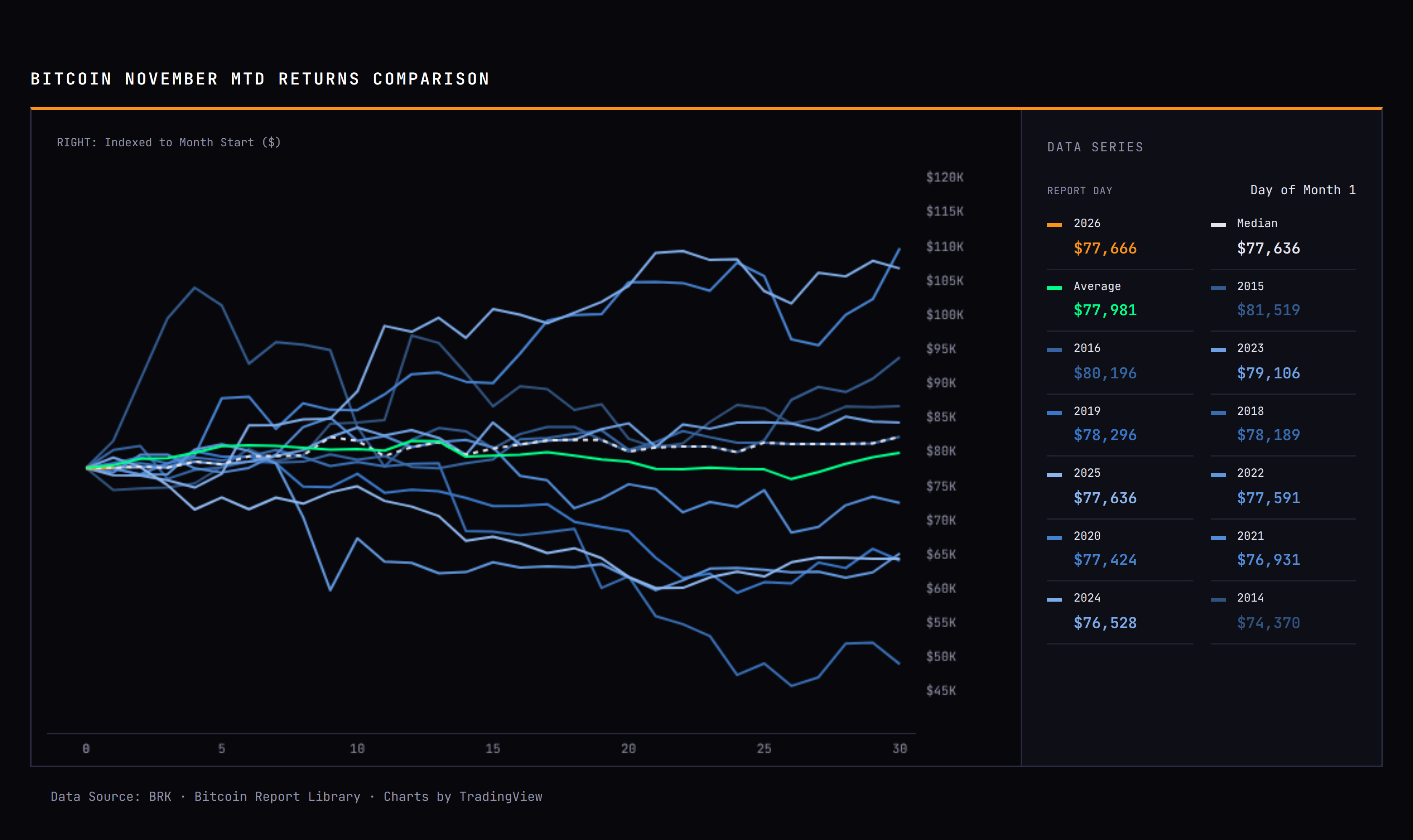
Bitcoin opened November with a modest 0.12% gain through November 1, just above the historical same-date median of 0.08%.
The historical November paths provide a reference for how the month has unfolded in prior years, but the coming weeks will determine whether Bitcoin follows a stronger or weaker seasonal pattern.
October’s -6.93% reversed September’s 6.11% gain, a break in momentum that November’s small opening rise has yet to repair.
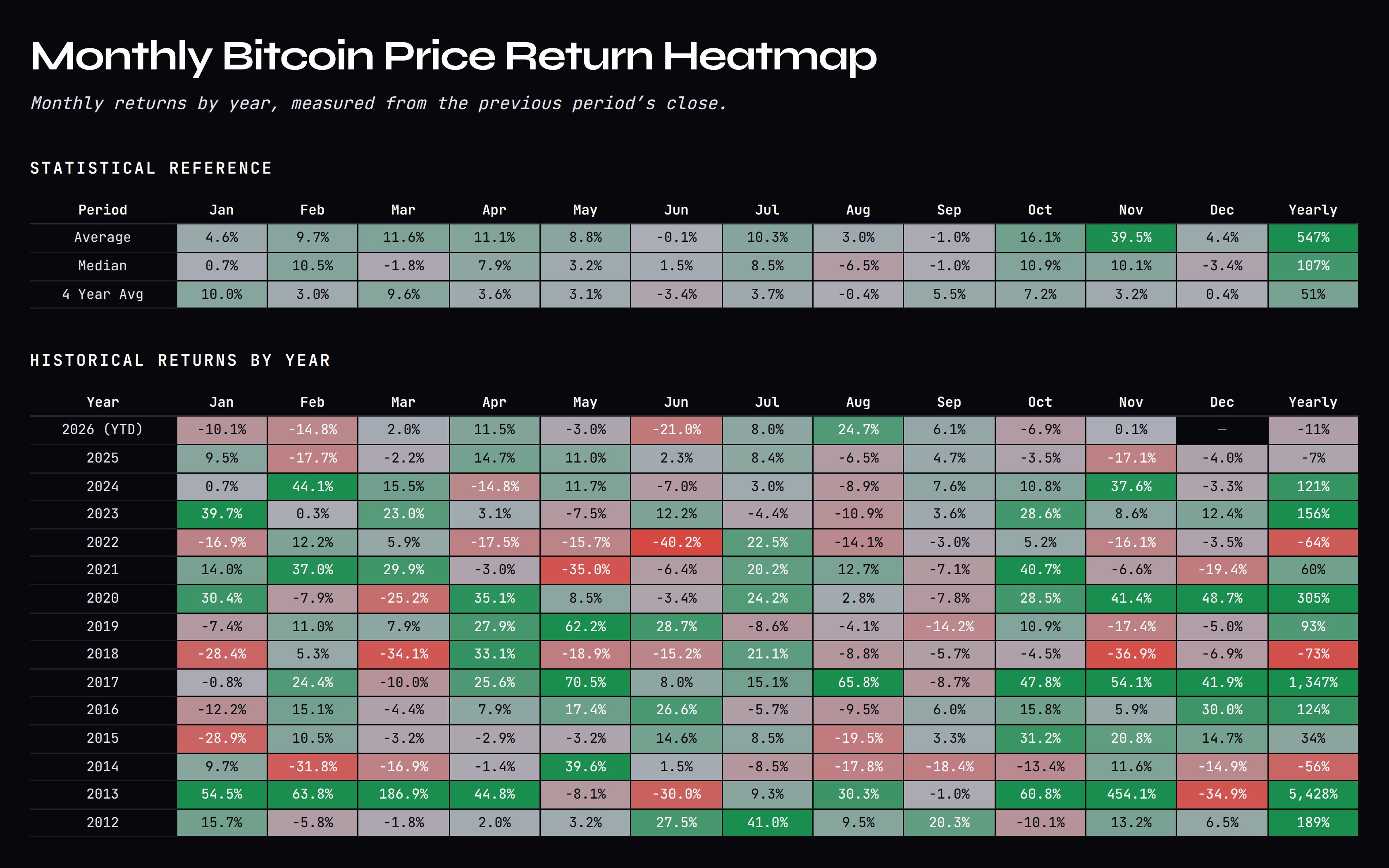
—> View monthly return heatmap
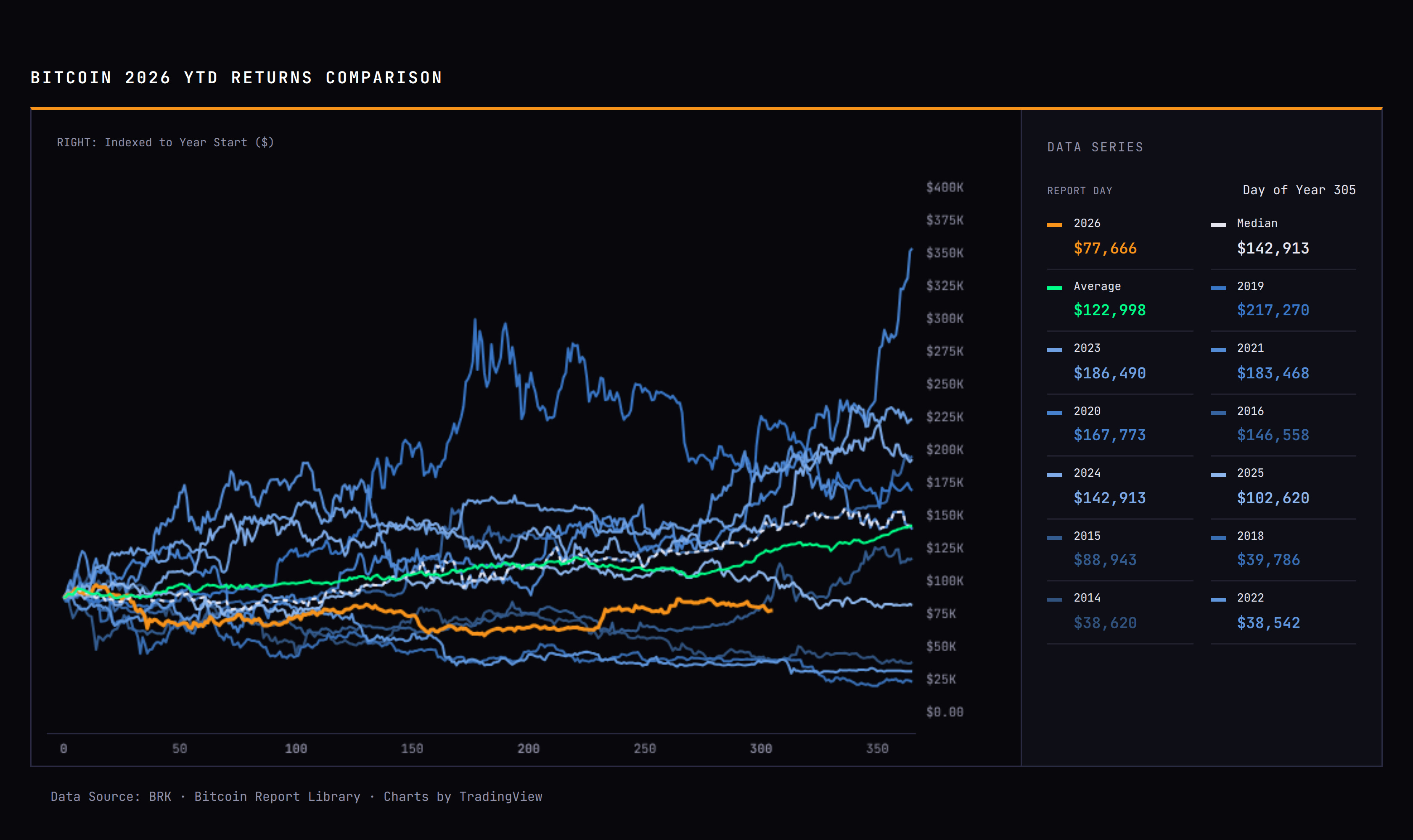
Bitcoin’s -11.03% year-to-date return through November 1 leaves breakeven further away than last week’s -8.09%.
Returning to breakeven now requires a 12.39% rally, making recovery of the year’s losses the more immediate milestone as year end approaches.
Looking Ahead
November 2, 2026: Binance targets a proof-of-reserves report; we watch whether disclosure supports its promised customer-loss coverage.
November 3, 2026: US midterm elections may reset policy expectations; we watch the market’s response.
November 6, 2026: The US October jobs report tests whether labor conditions reinforce expectations for tighter policy.
November 10, 2026: The US October CPI report is the next inflation test for December rate expectations.
Follow the Bitcoin market between issues

Explore Bitcoin’s price, valuation models and network activity in our Market Dashboard, updated daily. Use the data to revisit our outlook and form your own view.
