

The Week in Bitcoin - November 2–8, 2026
Bitcoin closed the week at $75,031, returning -3.52% as ETF withdrawals deepened and rate-hike risk returned. It stands 37% below our $120,000 year-end base case and 7% above our $70,000 bear case. Reaching base requires a 60% rally with 53 days left in 2026.
The downside bias in last week’s call was right, but $76,900 support failed and $75,818 broke. Deeper support stayed untested; the $77,700 upside trigger briefly fired without reaching $80,600.
Weekly News Recap

Top story of the week
Bitcoin falls below $75,000 as jobs data revive rate-hike bets
Thursday’s selloff coincided with an estimated $1.08 billion in 24-hour crypto liquidations, including about $954 million in longs, bets on rising prices.
Friday’s jobs report showed October payrolls up 165,000 and unemployment falling to 4.1%. Bitcoin then fell below $75,000 while technology shares recovered.
US spot Bitcoin ETFs lost $1.25 billion over the week, their largest weekly net outflow since the week of June 22, 2026. The Block reported that 2026 ETF flows turned negative.
Other headlines this week
Treasury buyers diverge. Strategy bought 811 BTC for $65.5 million while repurchasing about $208 million of preferred shares. Strive disclosed 15,124 BTC bought from October 1 through 30.
Miners pivot toward AI. Riot’s 15-year Anthropic lease, worth about $28 billion, became binding; it expects to keep selling substantially all mined Bitcoin. IREN plans to exit Bitcoin mining by year-end. Texas’s governor-elect pledged to keep data-center approvals paused pending new rules.
Binance recovery. Withdrawals reopened across 15 networks after the October 29 theft, estimated by Elliptic at $6.43 billion. Elliptic later tracked about $124 million in stolen tokens converted into Bitcoin, with little stolen crypto likely cashed out.
MEXC transfer ban. FinCEN ordered covered US financial institutions to stop transfers to or from MEXC 30 days after Federal Register publication. Publication was pending Friday evening; this is a transfer ban, not an OFAC sanctions designation.
Washington resets. Paradigm adviser Justin Slaughter said the CLARITY Act would not pass the lame-duck session, while House staff were reportedly drafting replacement market-structure legislation that could expand the SEC’s role.
Oil reprices conflict risk. Oil extended its biggest weekly loss since April 2020 as traders weighed US-Iran diplomacy against fresh attacks.
What it means
Demand remains the constraint. ETF redemptions withdraw capital from regulated Bitcoin exposure while miners direct Bitcoin proceeds toward infrastructure. Corporate buying provides a counterweight, but Strategy’s preferred-share repurchases show how financing priorities can compete with accumulation.
Lower oil could ease inflation pressure, yet strong hiring keeps higher rates in play. Sustained ETF inflows would strengthen the recovery case by helping absorb ongoing sales. Exchange reopening restores access without demonstrating renewed investment demand.
Market Brief
Bitcoin ended the week at $75,031, with a $1.51 trillion market capitalization and 1,333 sats per dollar.

It opened at $77,770 and closed at $75,031, returning -3.52%. Wednesday’s $80,374 close gave way to Sunday’s lowest daily close since August 20, 2026.
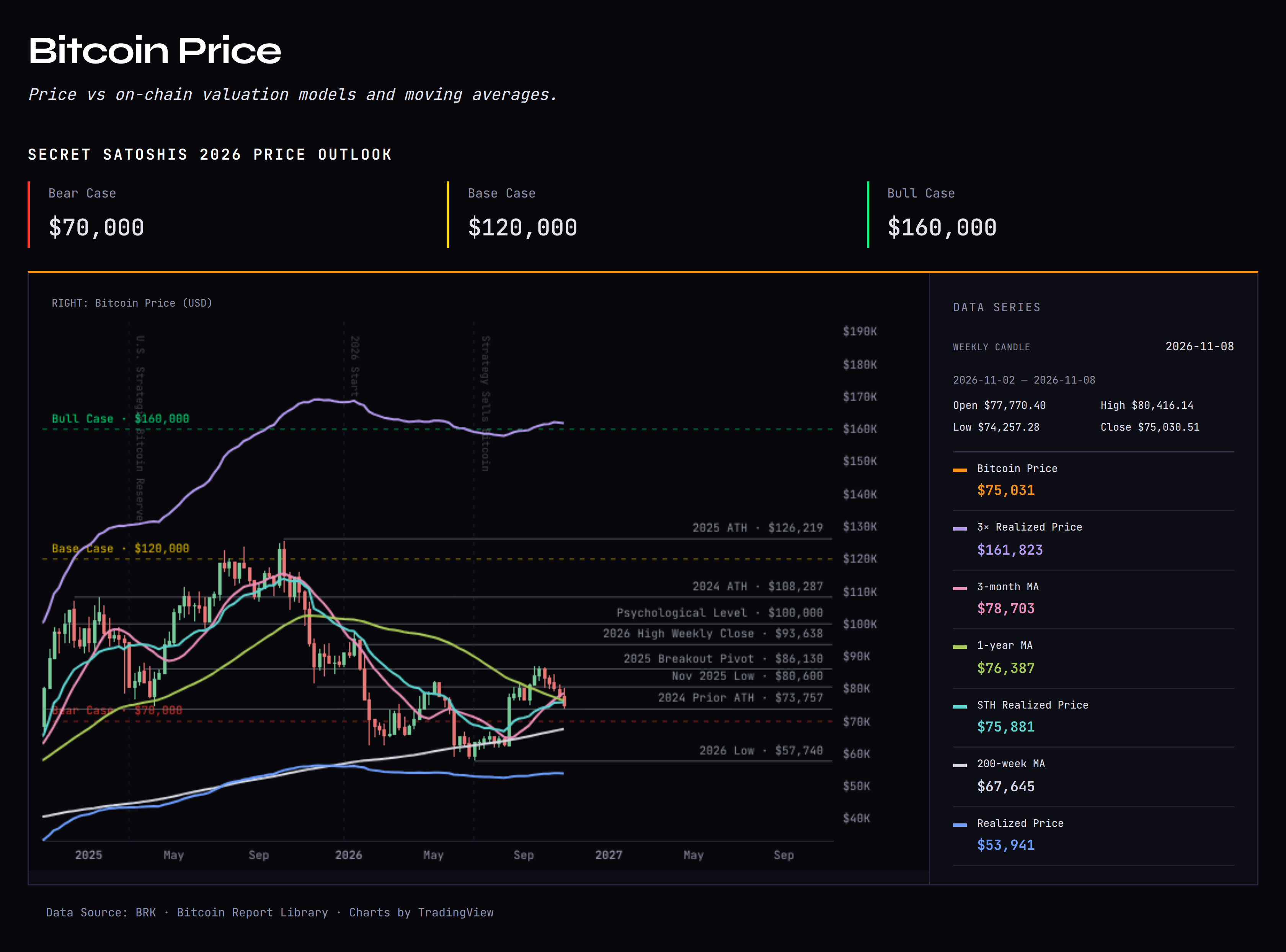
The failed rebound suggests buyers could lift price briefly but could not sustain the move. That keeps the burden of proof on a recovery.
Our market view
Bitcoin fell below the $75,881 short-term-holder cost basis on November 5, leaving recent buyers underwater on average. Over the next one to two weeks, we expect a test of nearby support, with rebounds facing that cost basis and the $76,387 1-year moving average.
Holding $73,800: Trading between the $73,757 prior 2024 high and the 1-year average should favor the lower end.
Below $73,800: The $73,128 200-day moving average is next; losing it brings our $70,000 bear case into focus.
Above $76,400: Reclaiming the 1-year average opens the $78,703 3-month moving average.
Seasonal Context
Bitcoin’s November return is -3.28% month to date through November 8, now 5.64 percentage points below the same-date historical median of 2.37%. Last week’s near-median start has given way to underperformance.
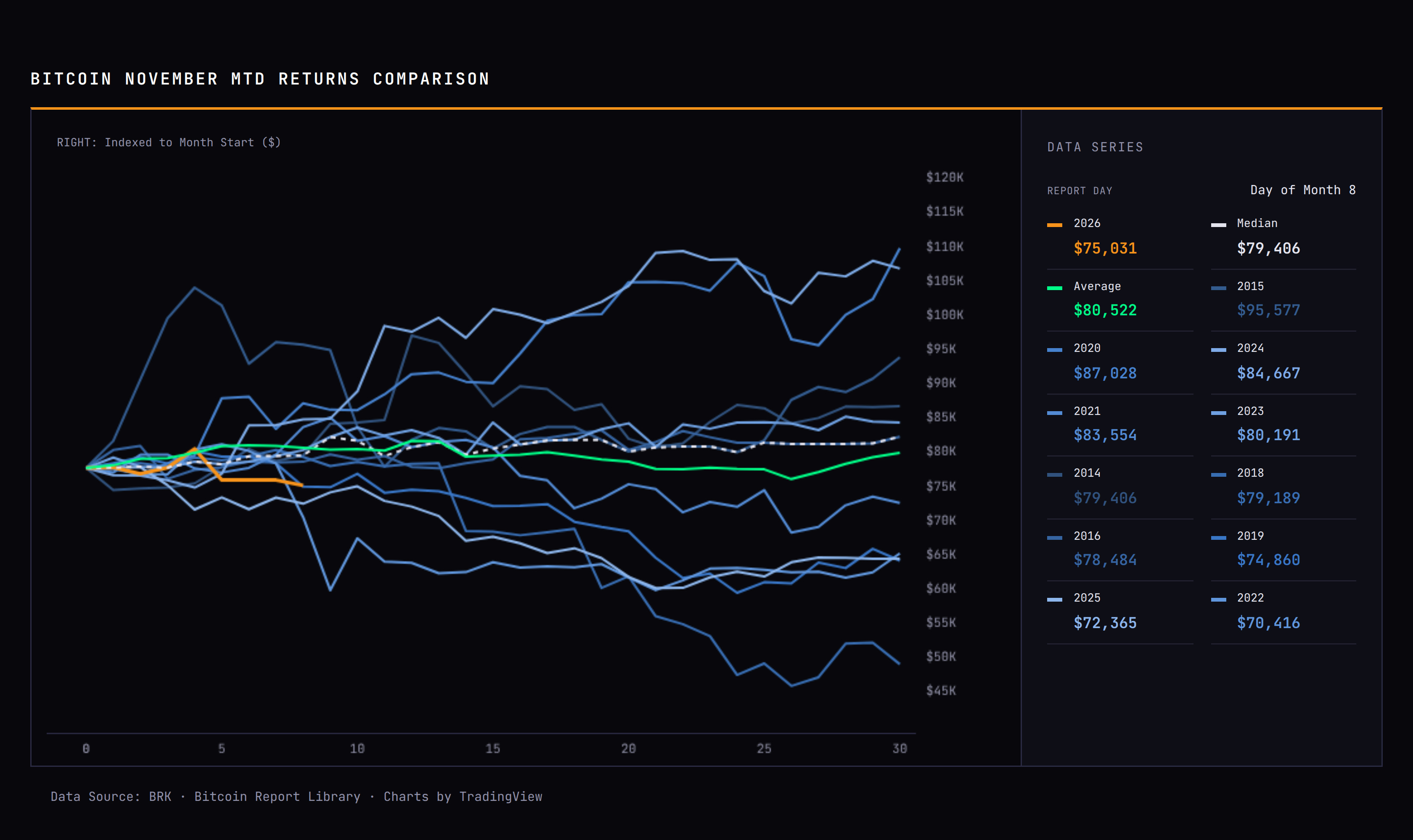
October’s -6.93% followed September’s 6.11% gain. November is extending that reversal, although a second declining month is not yet complete.
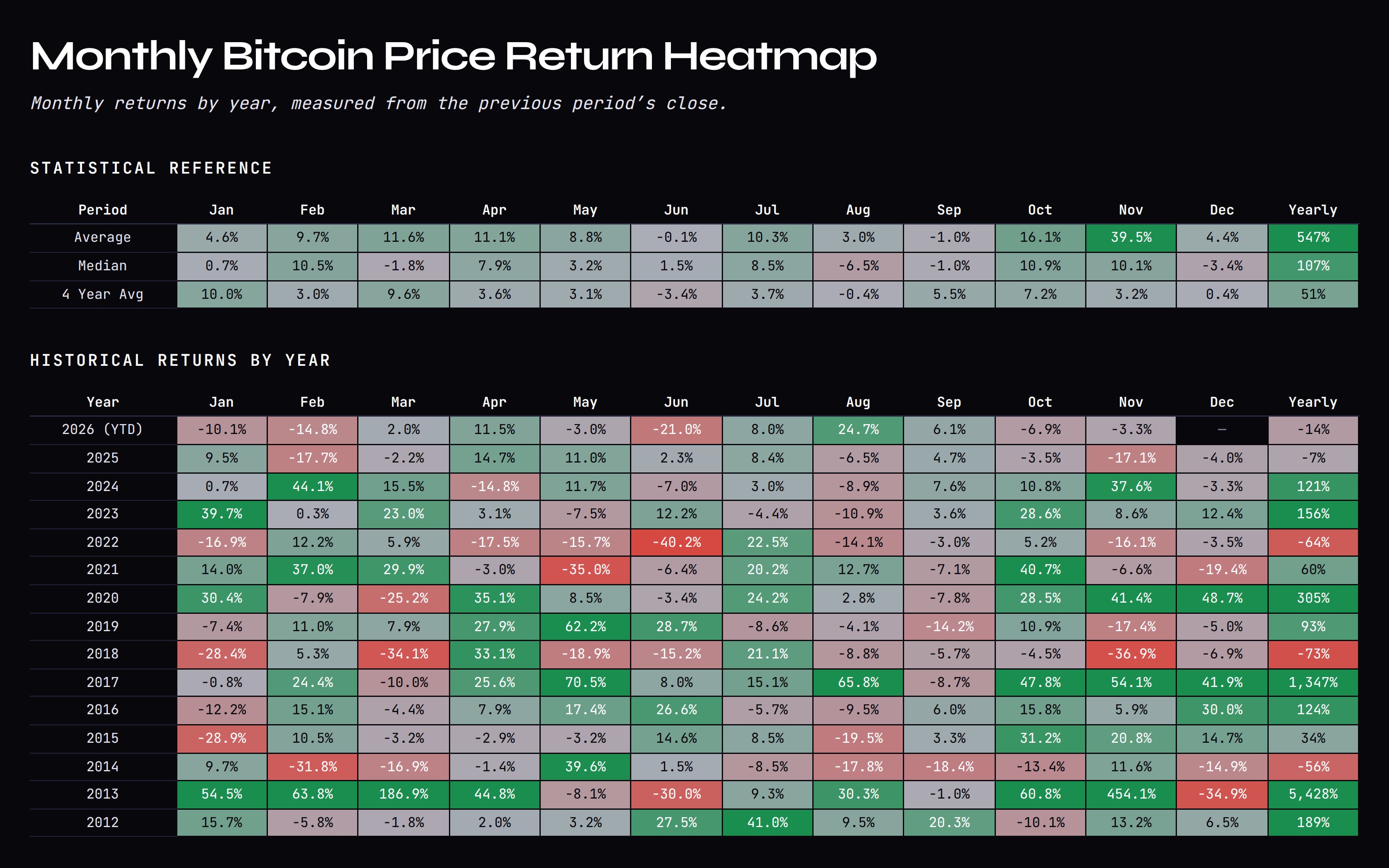
—> View monthly return heatmap
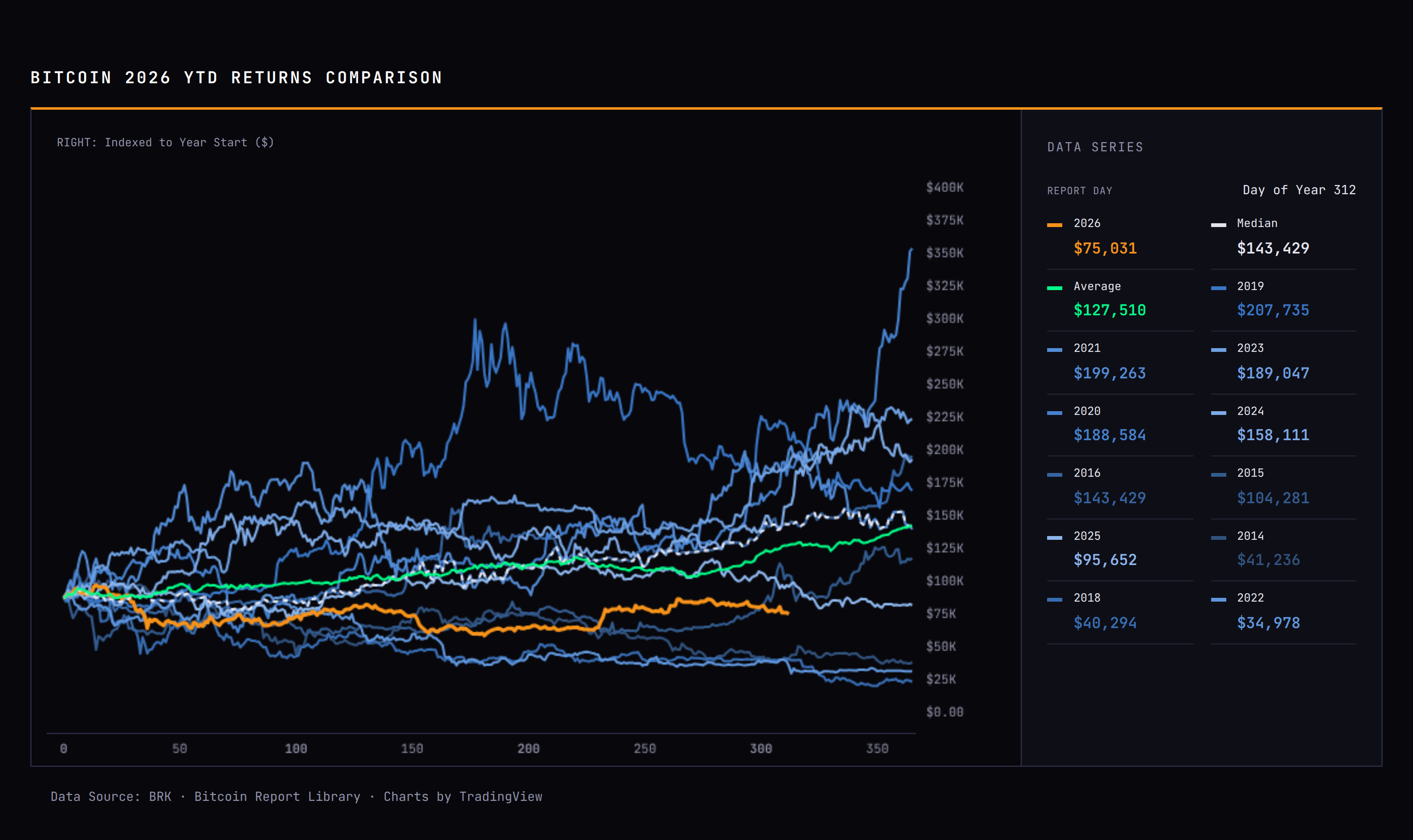
Through November 8, Bitcoin’s year-to-date return is -14.05%. Recovering the year’s losses requires a 16.34% rally, a higher hurdle than last week. Breakeven remains the more immediate milestone as year end approaches.
Looking Ahead
November 10: October CPI tests whether inflation is easing enough to temper rate-hike risk after the strong jobs report.
November 11: MSCI publishes its final list under the non-operating-company eligibility screen; we watch which Bitcoin treasury companies face index removal.
November 16: Q3 institutional-holdings filings are due, updating the quarter-end picture of Bitcoin ETF ownership alongside recent redemptions.
Follow the Bitcoin market between issues
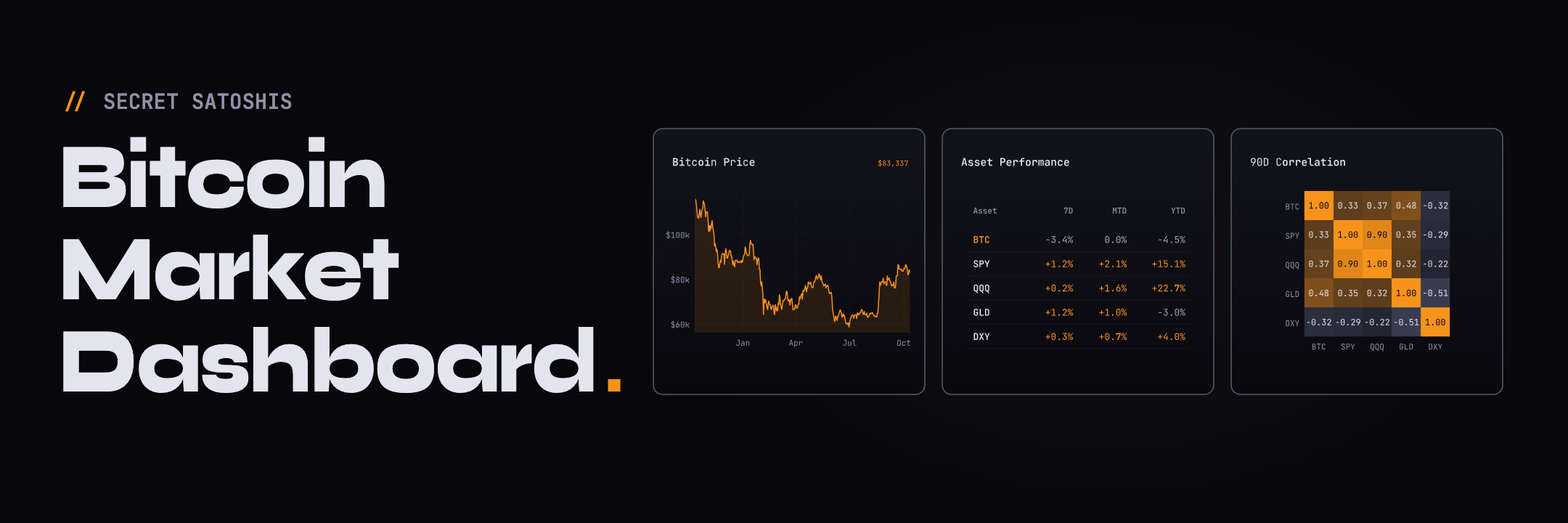
Explore Bitcoin’s price, valuation models and network activity in our Market Dashboard, updated daily. Use the data to revisit our outlook and form your own view.
